Shim Hyung-tak and His Family Choose Donations Over Profit With ‘Haru’ Merchandise
"It’s just a hobby to draw, and frankly, I never imagined commercializing anything featuring ‘my child’s goods.’ I felt undeserving, even guilty about the idea,” Shim Hyung-tak recently admitted. “But this opportunity came, and the thought of connecting with those who love Haru and my art inspired me. All proceeds will be donated to a good cause.”
Summing up Shim Hyung-tak and his wife’s decision as merely “a good deed” fails to convey its complexity and weight.
Recently, Shim announced the creation and sale of merchandise inspired by his son Haru, vowing to donate all profits to charity—and even contribute some of his personal funds to maximize the donation. While using merchandise sales for charity isn’t entirely new in the entertainment industry, this case stands out from the very beginning.
The key difference is that at the heart of these goods isn’t a fictional character or generic brand, but a real family, and specifically their son Haru—already familiar to the public through TV and social media.
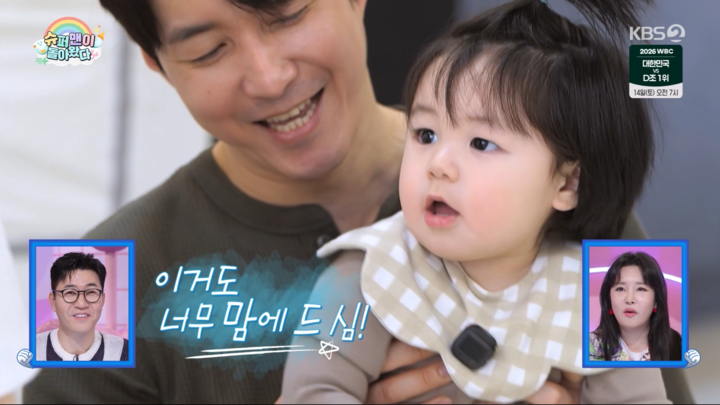
The Shim family has consistently shared their daily life through the KBS2 show "The Return of Superman." Contributions tracking Haru’s growth—from his 100th to his 200th day—evolved from fleeting entertainment into a serialized narrative consumed by viewers. The public already knows this child’s face, name, and life story. The birth of this merchandise is a natural extension of that ongoing narrative.
It is here that the complexity emerges. Merchandise based on a child inherently draws two responses: on one hand, it’s hailed as “meaningful for charity,” but on the other, it raises eyebrows as to whether the family’s story is being commercialized for profit. In Korean show business, the commercialization of one’s children is particularly controversial, often sparking debates around exploitation and commercial purpose.
Despite all this, the couple deliberately chose the path most open to scrutiny. Rather than donating quietly, they made the entire process—design, sale, and donation—public and transparent.
What makes this decision even weightier is the involvement of the entire family in this highly visible structure. By placing their child at the center of these goods, Shim and his wife have brought their private lives—especially Haru and his mother—into the realm of public narrative and opinion. Unlike typical celebrity donations, which tend to affect only the individual’s image, this approach impacts the whole family.
Once a child’s name, face, and story are attached to a commercial product, everything—the intention, approach, and process—comes under intense public scrutiny, beyond just good intentions. Ultimately, this choice is less about simply making a donation, and more about taking on full responsibility for the consequences that come with it, family included.
Shim Hyung-tak’s emphasis on supplementing donation amounts with his own funds is notable. With goods-based charity, actual proceeds depend on sales performance; donation goals are never guaranteed. By voluntarily covering any potential shortfall himself, Shim is taking direct responsibility for the ultimate outcome.
As merchandise drives often face disputes over sales results, transparency, and how much is actually donated, putting private money into the process ensures unequivocal personal accountability.
At its core, the family’s choice is less about how much they donate, and more about the manner in which they conduct themselves. They didn’t take the quiet path—instead, they chose openness, brought their private world into the public eye, and committed to following through personally to the very end.
Why did Shim Hyung-tak choose this route? Perhaps the answer has less to do with responsibility and more with sincerity.
His family’s daily life on "The Return of Superman," and Haru’s growth, have unfolded before numerous viewers and supporters. This shared narrative wasn’t created alone—it was built alongside the encouragement and affection of the public.
One question remains: how should that love be returned?
Shim Hyung-tak found his answer in the production of goods and charity, creating a way for fans to participate and returning the fruits of that participation to society. By promising his personal funds as well, he demonstrates a willingness to ensure that gratitude is completely paid forward.
Indeed, this is about more than goodwill. It’s a commitment to reciprocate the kindness received in the most honest way possible—a courageous act of gratitude expressed through action.
In the end, what matters most is not how much is donated, but with what spirit—and how far one is willing to take responsibility.
Note “This article was translated from the original Korean version using AI assistance, and subsequently edited by a native-speaking journalist.”
Photo=KBS 'The Return of Superman' broadcast screenshot
(MHN 관리자 )
사진=
Recommended News
* This article is provided by MHN Sports.